SAVE UP TO 10% TODAY! - PROMO CODE: UGOTIT10



What is Liability Protection and Why Does It Matter?
Meet Sarah: a boutique bakery owner whose business faced a $150,000 accident. Read this quick guide to learn how liability protection kept her family's livelihood safe, and why separating "Planet Business" from "Planet Personal" is the ultimate financial armor for any founder.
U GOT IT
7/2/20262 min read

Imagine building a successful business from the ground up. You’ve poured your heart, soul, and hard-earned cash into it. But one day, an unexpected accident happens—a client slips on a wet floor, or a product delivery goes sideways. Suddenly, your business is facing a lawsuit.
What happens to your personal bank account, your home, or your car?
The answer depends entirely on whether you have liability protection.
The Ultimate Force Field ⚡
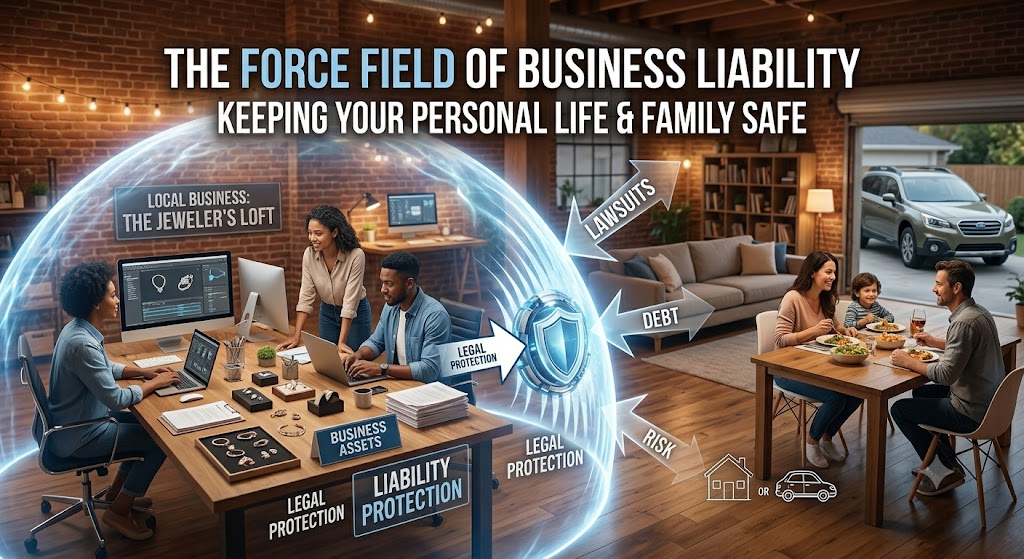
Think of liability protection as a sci-fi force field generated between two distinct planets: Planet Business and Planet Personal.
When you operate as a sole proprietorship, there is no force field. Your business and your personal life are treated as the exact same financial entity. If someone sues your business, they are essentially suing you.
However, when you formally incorporate or form a Limited Liability Company (LLC), you are creating a legally recognized, completely separate "person." This entity activates the force field.
Inside the force field: Your business bank accounts, commercial equipment, and company assets.
Outside the force field: Your personal savings, your family home, and the car you use to drive your kids to school.
The Golden Rule of Incorporation: If someone sues your business, the force field ensures they can typically only go after what the business owns. They cannot break through to seize your personal livelihood.
🚗 A Relatable Scenario: The Bakery Blunder
Let’s look at how this plays out in real life.
Meet Sarah. She opens a boutique bakery called Sweet Treats. She decides to legally incorporate her business as an LLC.
One afternoon, a catering delivery van owned by Sweet Treats accidentally backs into an expensive, high-end sports car parked outside an event venue. The damages are massive—totaling $150,000. The sports car owner decides to sue for damages.
Scenario A (Without the Force Field): If Sarah hadn't incorporated, she would be personally liable. If her business only had $20,000 in the bank, she would have to pay the remaining $130,000 out of her own pocket—potentially forcing her to sell her personal car or drain her kids' college funds.
Scenario B (With the Force Field): Because Sarah incorporated, the lawsuit is against Sweet Treats LLC, not Sarah. The plaintiff can claim the $20,000 from the business bank account, but they cannot touch Sarah's personal home, her personal savings, or her family vehicle. The force field held strong.
Forming a corporation or LLC isn't just paperwork; it's the financial armor that ensures a bad day at the office doesn't become a tragedy at home.
U GOT IT
Strategic resources and startup essentials designed for the modern founder.
Contact
Receive More Business Tips
© 2024. All rights reserved.